Table Of Content

“Gray hair tends to turn a dull yellowish color that can age you, so try keeping it shiny and bright.” You can do this by using toning, purple-colored shampoos. Popular options include Aveda’s Blue Malva Shampoo, Davines Alchemic Silver series, and Joico’s Color Endure Violet. For an easy to use hair gloss, reach for the L’Oréal Paris Le Color Gloss One Step In-Shower Toning Gloss.
Gray Hair Study: What the Recent Findings Mean - Parade Magazine
Gray Hair Study: What the Recent Findings Mean.
Posted: Fri, 02 Jun 2023 07:00:00 GMT [source]
Senior Faculty Editor, Harvard Health Publishing; Editorial Advisory Board Member, Harvard Health Publishing
It’s been noted that gray hair is coarser, thinner, and “less manageable” — but there are products to help with this! Consider gray a new stage of life, one that you can learn to embrace in your own way. Unless you dye, your hair eventually loses its color, usually beginning in your 30s or 40s. Though going gray is natural, many people dread it because of society’s notions about aging. Here’s what researchers know about how and why graying hair happens. Hair graying happens when the pigment cells in the hair follicle die, which typically occurs with age.
Why You Might Be Getting Gray Hair at 20
"Some really want them covered, others want to have them blended with their hair color, and a couple even want to rock full-on gray," he said. Clairol Color partner and celebrity colorist Jeremy Tardo said he has noticed an uptick in clients with graying hair, but not everyone wants them hidden. Here's how and why graying hair happens, plus what you can do if you want to potentially reverse it. Before making any lifestyle changes or beginning supplements and treatments, it's advised to check in with a healthcare provider to make sure you’re on the right track. The hairs of the body, nose, face, chest and pubic area gray at a different rate than the scalp.
Medical Problem?

"The myth that gray hair makes you old is just that -- a myth. If you were young, vibrant, active, healthy pre-gray, you're still going to be that way. It's all in the attitude you bring to it," Jewell says. "If you think of it as merely another color choice, you won't be afraid of gray." A White person is considered to be prematurely gray if their hair turns gray by age 20. You could opt for an all-over color, but be aware that "this method can create a strong line of demarcation and require more maintenance, depending on the percentage of gray." Another option is highlighting the hair. "Adding lighter or blond pieces will help diffuse the look of gray in the hair and grow out more softly," Friese advises.
So why is this suddenly so common and is there a way to reverse or delay the appearance of premature grey hair? However, she says we should rethink how we see gray from a hue perspective. “First things first, there is no such thing as gray hair,” she tells us. Reavey says that once hair loses its pigment, the hair is completely translucent and appears white. ” You can attribute that to the percentage of natural hair color left on the strands. “The “gray” tone is actually due to the percent of natural hair color left and mixed in, causing many different shades of “gray,” she explains.
Grey hair in your 20s stressing you out?
In the majority of people, body hair usually occurs later, if at all, according to Eidelman and Medline. Spotting a wiry silver hair can be a rude awakening for those of us who aren't George Clooney. But if you've spotted a gray strand before your 30th birthday, don't panic.
However, hair color and race are two factors that can affect when you'll start to go gray. According to a study by the British Association of Dermatologists, fifty percent of the population has about 50 percent gray hair by the age of 50. The results of this research also found that the rate people go gray is linked to their ethnicity. If you've been gray for a while, you likely won't see your hair reverting to its former color by reducing stress levels. Graying is a natural aging process; eventually, you reach a point when it can't be reversed. Regardless, you can still reap other health benefits when you keep your stress in check.
In experiments on mice, they found such hair-raising experiences activated stem cells. “After just a few days, all of the pigment-regenerating stem cells were lost. Once they're gone, you can't regenerate pigments anymore,” Hsu said in a statement. According to the American Academy of Dermatology, it’s completely normal to shed anywhere between 50 to 100 strands of hair per day. However, if you’ve noticed more strands falling out of your head than normal, you may be experiencing alopecia, the medical term for hair loss. Common diagnoses include androgenetic alopecia, alopecia areata, telogen effluvium, and lymphocytic scarring alopecia, Agbai tells USA TODAY.
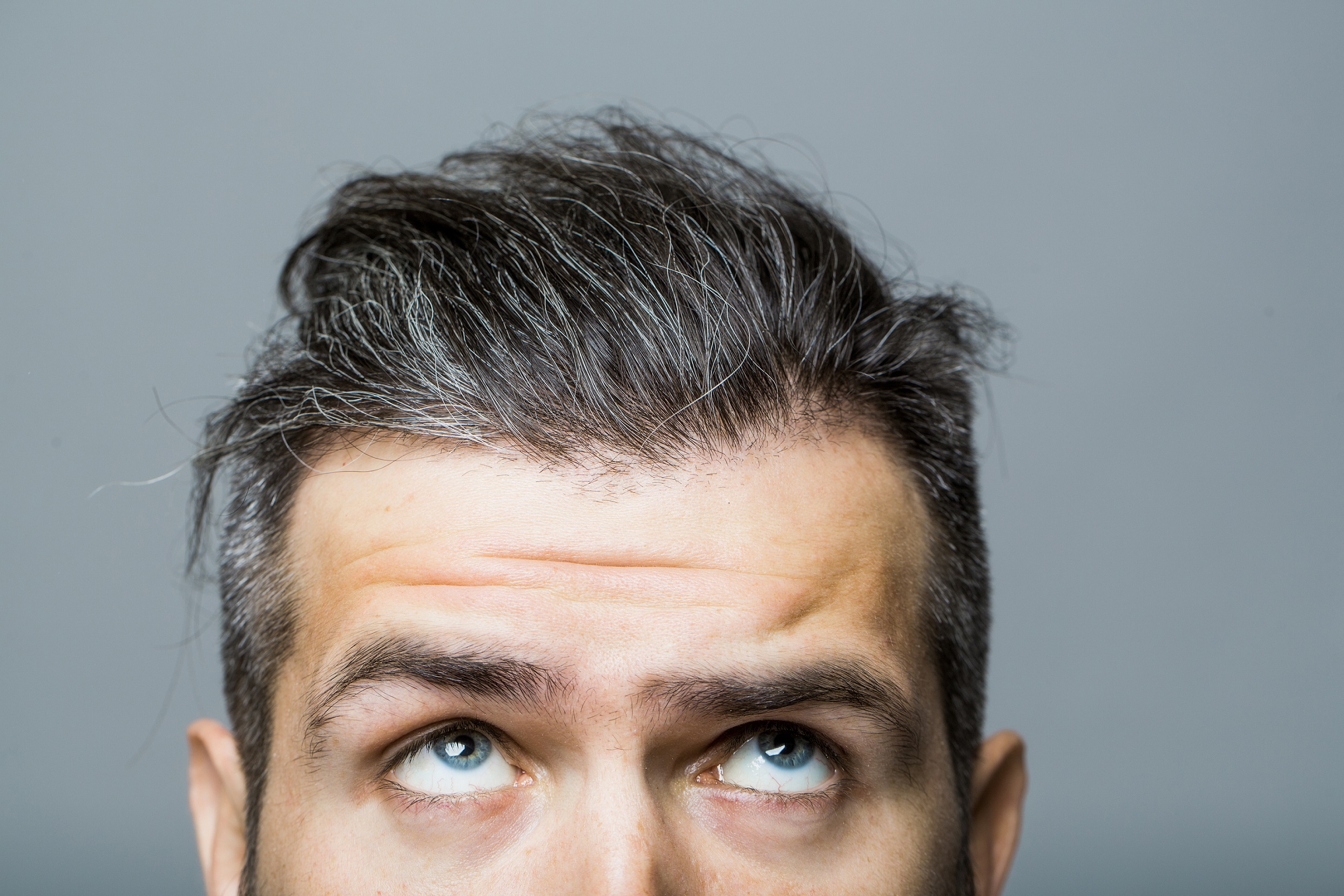
Typically, body hair grays later than hair on the scalp.
Hair gets its color from a pigment called melanin, which is produced by melanocyte cells in the hair follicles. Researchers have discovered that melanocytes endure damage over the years, which eventually leaves them unable to produce melanin. Studies have cited DNA damage and a buildup of hydrogen peroxide in the follicles as possible causes of this disruption in melanin production. Without melanin, the new hair that grows in has no pigment, which makes it appear gray, white, or silver. The healthiest thing you can do when it comes to graying strands is to control your emotional response to it.
While this explains the biological process of gray hair, there’s more to why one person may be gray at 25 and another at 45. Spotting your first gray hair can feel like a monumental event in the aging process. Researchers continue to look for a way to reverse the graying process, but so far with little success. Some medications have been reported, in rare cases, to restore pigmentation in gray hair. The evidence is of “low quality” and the medications may have damaging side effects, making them difficult to study for an essentially cosmetic purpose. But they do offer some hope, perhaps shedding light on “possible mechanisms to target” for future studies, according to Yale.
A recent study points out that without this protection, the UV light melts the cortex, making the hair more brittle and damaged. So just like your skin, you need to protect gray hair against the sun. A simple way is by using a protectant spray like Rene Furterer Solaire Protective Summer Fluid. Lack of certain nutrients has been found to play major roles in premature graying. According to one study, low ferritin, calcium, and vitamin D-3 all affect graying, while another study concluded that low copper, zinc, and iron advance premature graying. Contrary to popular belief, stress has not been shown to cause gray hair.
Why are more youngsters developing grey hair? - The Times of India
Why are more youngsters developing grey hair?.
Posted: Tue, 25 Apr 2017 07:00:00 GMT [source]
Further, he confirms that while early graying may occur in the 20s or 30s, it is extremely uncommon to see gray hair on someone in their teens. In other words, if your 15-year-old has gone gray, you may want to consult with a professional and not wave it off as a family trait. If you do want to prevent or reverse your gray hair then you can take a tablet called Melancor. Still, you may be curious why some people get gray hair earlier than others. Temporary solutions like trying semi-permanent hair dyes or using hair sprays specifically designed to cover grey roots. These options offer a quick fix without the commitment of permanent color changes.
"Like any part of the body that's aging, we need to give it more moisture, water, and nutritional support," Reavey tells us. In addition to supplements, incorporate hydrating scalp and hair treatments into your routine to keep your hair—no matter the color—healthy and thriving. There are plenty of hair dyes on the market that cover white hair, but many of these contribute to premature graying and may cause allergic reactions. Studies have shown a significant correlation between smoking and the onset of gray hair before age 30. A 2010 study published in the National Center for Biotechnology Information found that smokers are two and half times more likely to develop premature gray hair than non-smokers. There are many reasons people experience graying, but a lot of times it simply comes down to natural aging and genetics.
On top of that, making healthier lifestyle choices overall, and focusing on de-stressing can help slow down the aging process and keep you from prematurely reaching silver fox status. For example, alopecia areata is a condition that causes patches of hair loss. People with alopecia areata may have gray hairs that appear in areas of hair loss. Also, vitiligo, which causes patches of skin to lose pigment, can result in gray or white hair. Vitiligo occurs when cells that produce melanin die or stop functioning, resulting in a loss of skin color in patches over the body that usually grow over time. With alopecia areata, patches of hair — especially colored hairs — can be suddenly lost, which may result in more noticeable gray hair.